Global Worming

|
Left Side Bar
|
Environmental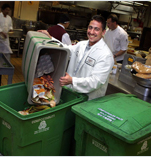
EnvironmentalReduces waste going to landfill In Australia well over half of the waste that is buried in landfills is organic. It is becoming increasingly expensive to dispose of waste in this way.
Reduces methane production and leachates As organic waste breaks down in anaerobic conditions (like in landfill) it produces methane, a gas that is over 20 times more harmful to the environment than carbon dioxide. Also in landfills leachate is produced from the liquid in organic waste and rainfall that passes through waste and the leachate can end up in the ground water system. Vermicomposting is an aerobic process that dramatically reduces methane and manages leachate in situ.
Recycles organic waste into a natural fertiliser and long term carbon sink When organic waste is buried in landfills, the nutrients are lost. This seems bizarre given the reliance of Australian farmers on chemical fertilisers (largely a by-product of the petrochemical industry) and the very low carbon stores in Australian soils. Vermicomposting of organic waste produces vermicaste, a complete soil conditioner that greatly improves the structure of soil and is a long term carbon sink. |
Facts about Organic WasteLorem ipsum dolor sit amet, consectetur adipiscing elit. Proin quis sem magna, eu pulvinar nisl. Ut ultrices iaculis tortor porta molestie. Morbi odio tellus, dapibus eget rutrum ac, lacinia vitae augue. Phasellus dictum massa vitae lorem fermentum semper. Etiam nec dolor ac elit euismod consequat eget sed magna. Vestibulum ultrices dolor at mauris lacinia vestibulum. Curabitur consectetur aliquam porttitor. Australians are throwing away food worth $5.2 billion a year, with the average household wasting $616 of food a year. Australians waste close to 3 million tonnes of food per annum, or 136 kilos per person per annum. |